
Why Fatigue Isn't Just 'Being Tired'
Chronic illness fatigue is a different category than ordinary tiredness. Here's language to describe it so others can finally understand.
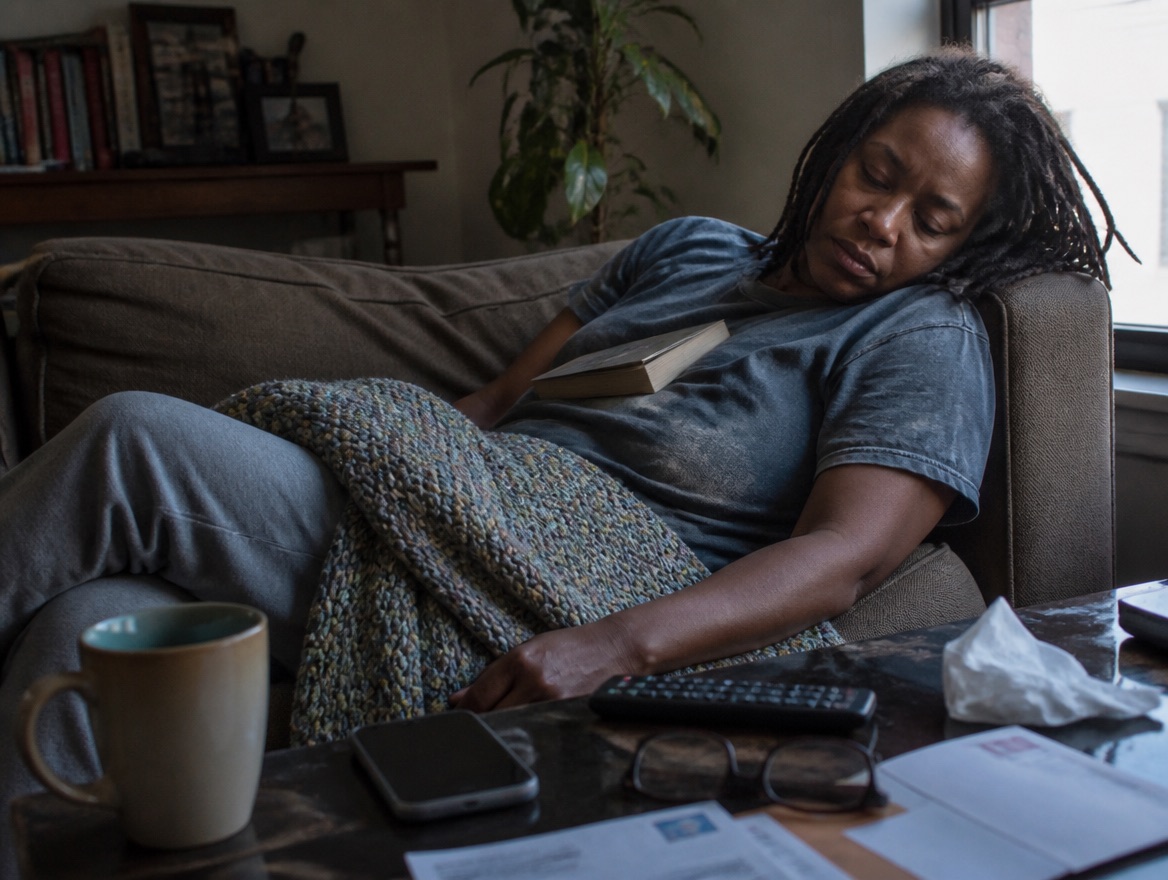
One of the loneliest moments in chronic illness is when someone tells you they are tired too. They mean well. They want to relate. But the word you both used means two very different things, and you can feel the gap open up in the middle of the conversation.
The trouble is not that other people lack empathy. It is that the English language hands us one small word for two unrelated experiences. Until you can name the difference, you will keep being misheard.
Tired is a state. Fatigue is a category.
Ordinary tiredness is the result of doing things. You stayed up too late, you ran around all day, you got through a stressful week. Sleep, rest, a quiet weekend, and it lifts. The body recovers because the body was never broken, only used.
Chronic-illness fatigue does not behave like that. It is not a stronger version of being tired, the way a downpour is a stronger version of rain. It is a different category of experience, with its own rules. Sleep can pass through it without touching it. Rest helps, but not in proportion to how much you take. Some days your body refuses tasks that should be easy, and refuses them in a way you cannot push through, no matter how much willpower you bring to bear.
This is the first thing worth naming clearly, to yourself before anyone else. What you are dealing with is not a tiredness problem. It is its own animal.
What chronic fatigue actually feels like
People describe it differently, and the difference matters. A few patterns come up again and again:
- Leaden heaviness. Your limbs feel weighted, as though gravity has quietly turned up. Lifting an arm, walking to another room, holding up a phone all cost more than they should.
- Post-exertional crash. You do something modest, like a short errand or a long conversation, and feel fine, or close to it. Hours or days later, the bill arrives, and it is much larger than the activity seemed to warrant.
- The body refusing. It is not that you are unwilling. Patients commonly describe a gap between intention and movement that willpower cannot close. You can want very much to get up and still find yourself unable to.
- Cognitive fatigue. Many people describe their thinking running out of fuel before the body does, or alongside it. Words go missing, decisions feel impossible, a familiar route turns confusing.
- Wired and depleted at the same time. A buzzing, fragile alertness that does not let you sleep but also does not let you function. This one is especially hard to describe to people who picture fatigue as drowsiness.
You may have one of these. You may have all of them on rotation. None of them is the same as needing a nap.
Language you can hand someone else
Part of why fatigue gets dismissed is that the listener has no reference point. Their brain reaches for the closest thing they know, which is regular tiredness, and that becomes the picture in their head. Useful descriptions move them away from that picture and toward yours.
A few phrases that tend to land:
- “It is like the flu without the fever.” Most people remember how the flu felt: heavy, foggy, unable to participate in normal life. That is a closer match than “tired.”
- “Sleep doesn’t fix it.” This breaks the assumption that more rest is the answer they should be helpfully suggesting.
- “It is heavier than tired. My limbs feel weighted.” Naming the physical quality moves the conversation out of the abstract.
- “I have a small amount of energy each day, and I have to choose where to spend it.” This reframes pacing as a budgeting problem, which most people understand.
- “If I overdo it today, I pay for it tomorrow, or for several days.” The delayed-cost idea is foreign to people without illness. Spelling it out helps.
- “I am not tired in the way you are picturing.” Sometimes the most direct version is the most effective.
A small contrast can help too, especially with skeptical listeners:
| Everyday tired | Chronic-illness fatigue |
|---|---|
| Comes from doing things | Can arrive after doing nothing |
| Lifts with a night of sleep | Often unchanged by sleep |
| Roughly matches the effort spent | Wildly out of proportion to effort |
| One bad day, then recovery | Days or weeks of cost from one overreach |
You do not need to convince anyone of the science. You only need to give them enough of the texture that they stop substituting their experience for yours.
Using the language for yourself
The same vocabulary that helps a partner or a manager understand you also helps you understand yourself. If you can tell the difference between a tiredness day and a fatigue day, you can make better decisions about what to attempt. You can also stop blaming yourself for failing at things that were never failures of effort.
It is worth keeping a few of your own phrases close at hand. The ones that felt true the last time you said them out loud. You will use them again, with a new manager, a new friend, a new clinician who has never met you before.
When fatigue is worth a clinician conversation
Most people living with chronic illness already know their fatigue intimately. The pattern is familiar, even if it is hard. There are still moments when it is worth flagging fatigue to your care team rather than absorbing it as more of the same.
A few situations worth raising:
- Fatigue that is genuinely new. A baseline shift, not a flare you recognize.
- Sudden worsening you cannot explain. A clear step down that is not tied to overexertion, illness, or a known trigger.
- Fatigue that arrives with new symptoms. Especially anything cardiovascular, neurological, or related to breathing.
- Fatigue that is changing how you function for basic care. When eating, hydrating, or moving safely becomes hard, that is information your clinician needs.
You are not being dramatic by bringing this up. You are giving your care team data they cannot get any other way. A short, clear description of what has changed, and when, is often more useful than a long account of how bad it feels.
The bottom line
Chronic-illness fatigue is not extra tiredness. It is a different experience that happens to share a word with one. Naming the difference, for yourself and for the people around you, is one of the few ways to close the gap between what you are living and what others assume you mean. The right phrase at the right moment will not cure anything, but it can shift a conversation, and sometimes that is what makes the next day a little easier to navigate.
Keep reading

Dysautonomia vs. POTS: How the Umbrella Term and the Diagnosis Relate
A clean breakdown of how dysautonomia and POTS relate, why one diagnosis doesn't rule out the other, and what the distinction means in practice.

What Does a Lupus Flare Actually Feel Like?
Plain-language descriptions of the most common lupus flare sensations, so readers can put words to what they're noticing and decide what's worth a clinician's call.
Why You Feel Worse the Day After Exercise
The delayed crash that follows exertion is real, predictable, and often misread. What is happening, what it is not, and how to plan around it.